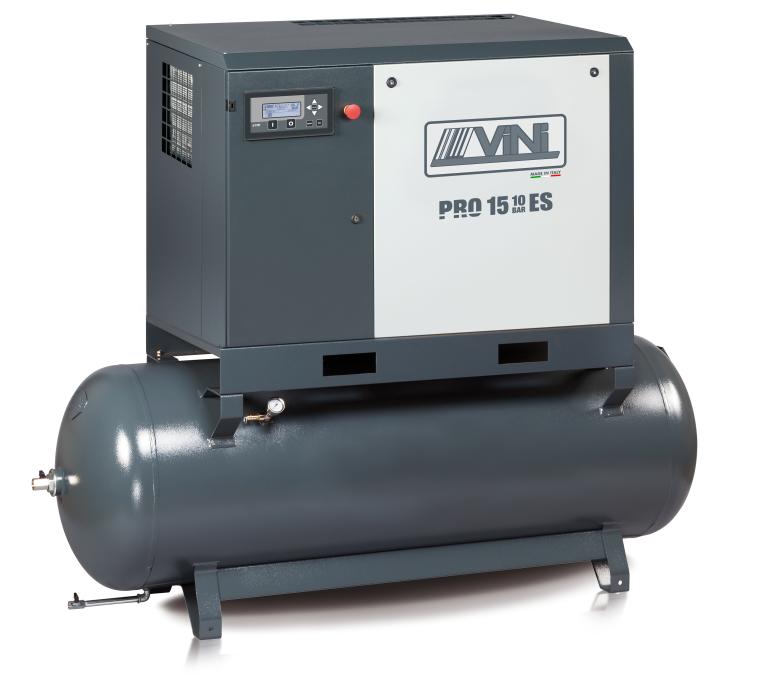
Choosing between a piston (reciprocating) and a rotary screw compressor is the most consequential decision in any compressed-air system. The wrong call means years of wasted electricity — or a machine that simply cannot keep up.
How each one works
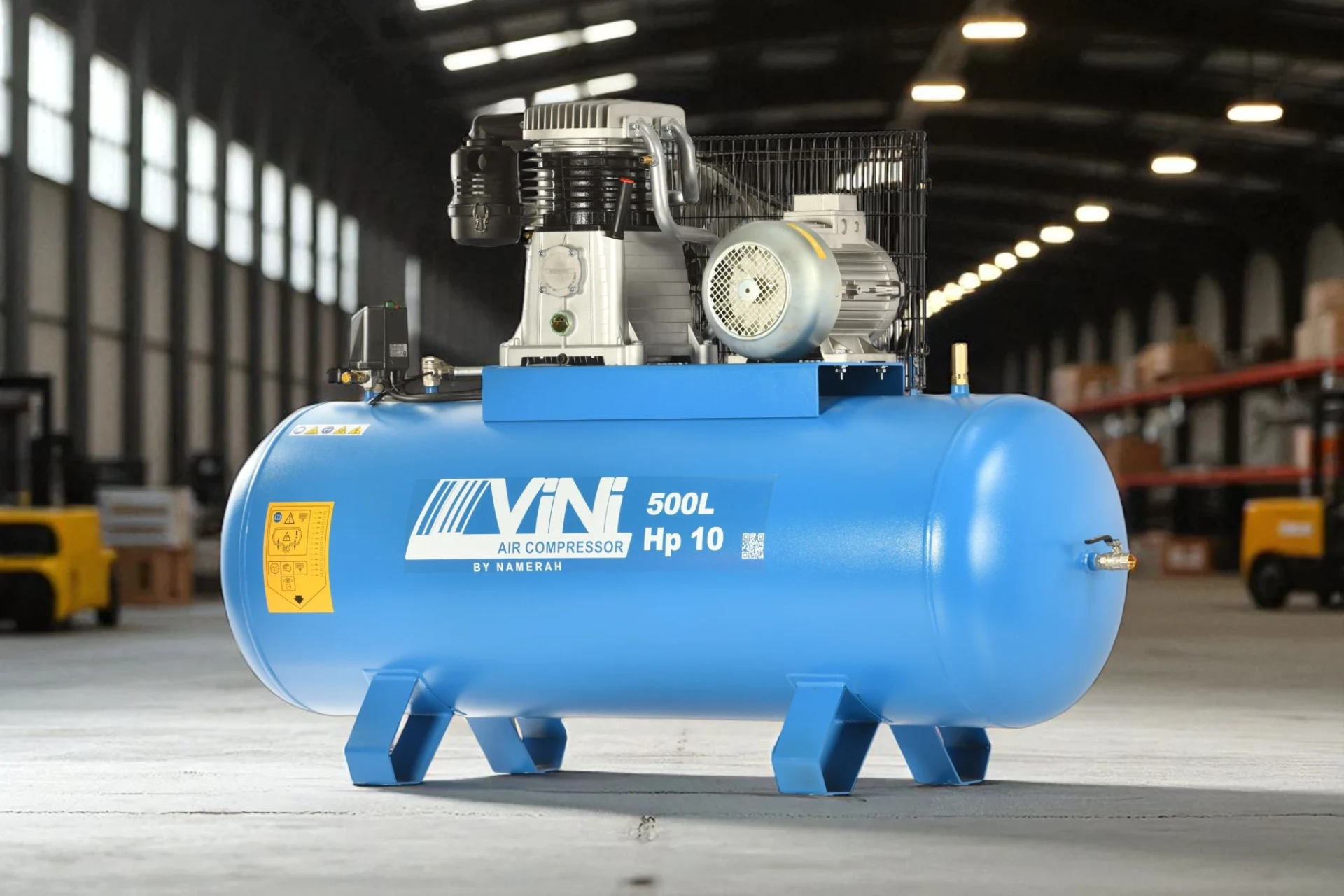
- Piston compressors pull air in with a piston, compress it in a cylinder, push it into a tank. Same mechanical principle as a car engine. Simple to service and gets hot under continuous load.
- Rotary screw compressors use two interlocking helical rotors to compress air continuously. Suited to sustained, continuous-demand operation.
Side-by-side comparison
| Factor | Piston | Rotary screw |
|---|---|---|
| Demand pattern | Intermittent demand, with rest between cycles | Sustained or continuous demand |
| Daily run profile | Intermittent demand, with cool-down between cycles | Sustained or continuous demand |
| Noise level | 80–95 dB | 65–75 dB |
| Energy efficiency | Lower | 15–30% better |
| Air quality | More oil carry-over | Cleaner, lower moisture |
| Service life | Depends on duty, site conditions and maintenance — follow the operating manual for your model | Depends on duty, site conditions and maintenance — follow the operating manual for your model |
| Maintenance | Frequent | Less frequent |
| Best for | Workshops, intermittent use | Factories, continuous production |
When piston wins
- Your air demand is intermittent — tools fire in short bursts with cool-down gaps between them, so the compressor never has to run continuously.
- You need a portable or single-phase unit.
- Examples: tire shops, small repair garages, body shops, mobile service vans.
When screw wins
- Your air demand is sustained or continuous — the compressor would otherwise spend most of every hour loaded, with no time to cool down.
- Energy efficiency matters across long running hours.
- You need clean, dry air for paint, food, electronics, or instrumentation.
- You want one quiet machine that fits in the production area.
- Examples: production lines, paint booths running back-to-back, dental/medical labs, large fleet workshops.
What to specify when you order
Whichever type you choose, ask the supplier for:
- CFM at your actual working pressure (10 bar).
- Real power draw under load (kW), not nameplate HP.
- Sound level at 1 m.
- Tank capacity (or recommended receiver size for tankless screws).
- Warranty period and after-sales support location.
Our recommendation
If you cannot decide, the question we ask first is: what does your air demand profile look like? Short bursts with idle gaps → piston. Sustained, near-continuous draw → screw. Mixed profiles depend on how much you value noise, air quality, and energy efficiency.