Most plants dramatically underestimate what their compressor costs to run. The nameplate says 75 kW; the electricity bill says something very different. This calculator walks through the honest math, then shows the four levers that cut the bill without changing production.
The 5-step calculation
Step 1 — Shaft power (kW)
Start with motor nameplate kW, not HP. If you only have HP: kW = HP × 0.746.
Step 2 — Loading factor
A fixed-speed screw at "full load" 100% of the time is rare. Real plants average:
| Duty pattern | Average load factor |
|---|---|
| Continuous process, tight tolerance | 0.85–0.95 |
| Two-shift factory, mixed demand | 0.55–0.70 |
| Single-shift workshop | 0.30–0.45 |
| Weekend/intermittent | 0.15–0.25 |
Multiply shaft kW × load factor = average draw kW.
Step 3 — Motor + drive efficiency
Electricity input is always higher than shaft output. Divide by combined motor + drive efficiency:
- IE3 fixed-speed screw at rated load: ÷ 0.93
- IE3 fixed-speed at 50% load: ÷ 0.87
- VSD screw at 60% load: ÷ 0.94 (VSD peak-efficient in the mid-range)
- Piston compressor (belt-driven): ÷ 0.88
Step 4 — Hours per year
Record actual running hours, not shift hours. A compressor that runs 20 minutes on, 40 off in a workshop clocks ~1,500 hours in a "40-hour-week" plant, not 2,080.
Step 5 — Multiply by tariff
KSA industrial tariff for 2026 sits around SAR 0.18/kWh on the flat commercial rate and up to SAR 0.22/kWh during peak summer. Use your own bill for accuracy.
Annual cost (SAR) = (kW shaft × load factor ÷ efficiency) × hours × tariff
Worked examples
A. Small workshop — 15 HP piston, 1,500 h/year, 0.35 load factor
15 HP × 0.746 = 11.2 kW → × 0.35 ÷ 0.88 = 4.45 kW average draw → × 1,500 × 0.18 = SAR 1,200/year.
B. Mid-size factory — 50 HP fixed-speed screw, 5,000 h/year, 0.75 load
50 HP × 0.746 = 37.3 kW → × 0.75 ÷ 0.91 = 30.7 kW average → × 5,000 × 0.18 = SAR 27,650/year.
C. Large plant — 100 HP VSD screw, 6,000 h/year, 0.60 average trim
100 HP × 0.746 = 74.6 kW → × 0.60 ÷ 0.94 = 47.6 kW average → × 6,000 × 0.18 = SAR 51,400/year.
Compare (C) with the same 100 HP as fixed-speed at 0.85 load: 67.5 kW average → SAR 72,900/year. The VSD saves SAR 21,500 every year — that pays back the price premium in under three years and keeps paying for the machine's whole life.
The four levers that cut the bill
1. Cut discharge pressure by 1 bar → save ~7%
Every 1 bar above what your tools truly need adds ~7% to compressor energy. Measure the lowest tool-inlet pressure while the plant is running flat out; add 2 bar for pipe/dryer/filter losses; that's your compressor setpoint. Most plants find they are 1–2 bar over-pressurised out of habit.
2. Fix compressed-air leaks → save 15–30%
An untuned KSA industrial plant leaks 20–35% of its compressed air. A single 3 mm hole at 7 bar wastes ~SAR 4,500/year in electricity. Do a leak audit with an ultrasonic detector twice a year; tag and fix every leak within a week.
3. Switch to VSD on variable loads → save 20–35%
If your average load factor is under 0.65 and demand varies through the shift, a VSD screw modulates to match — no idle-run waste. Payback in 2–4 years on 4,000+ h/year plants.
4. Recover heat → offset 50–90% of shaft energy
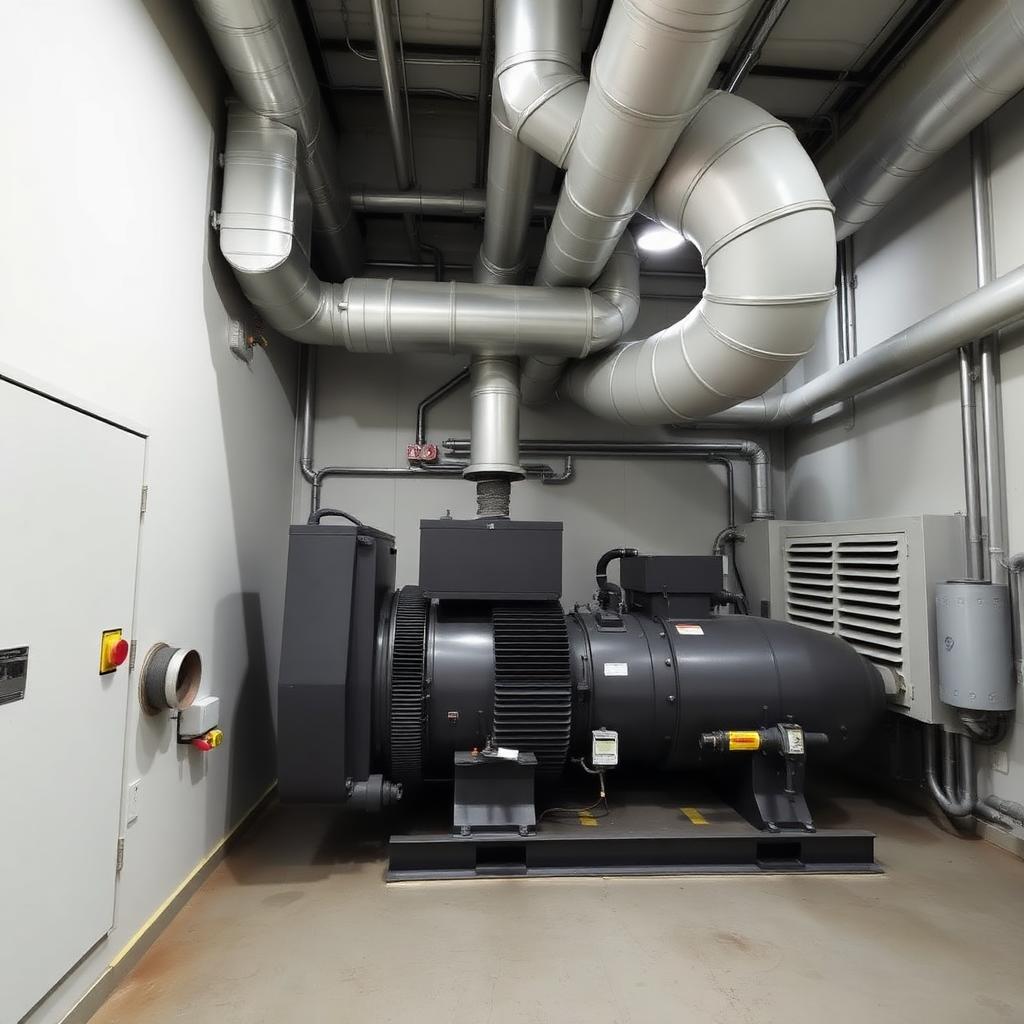
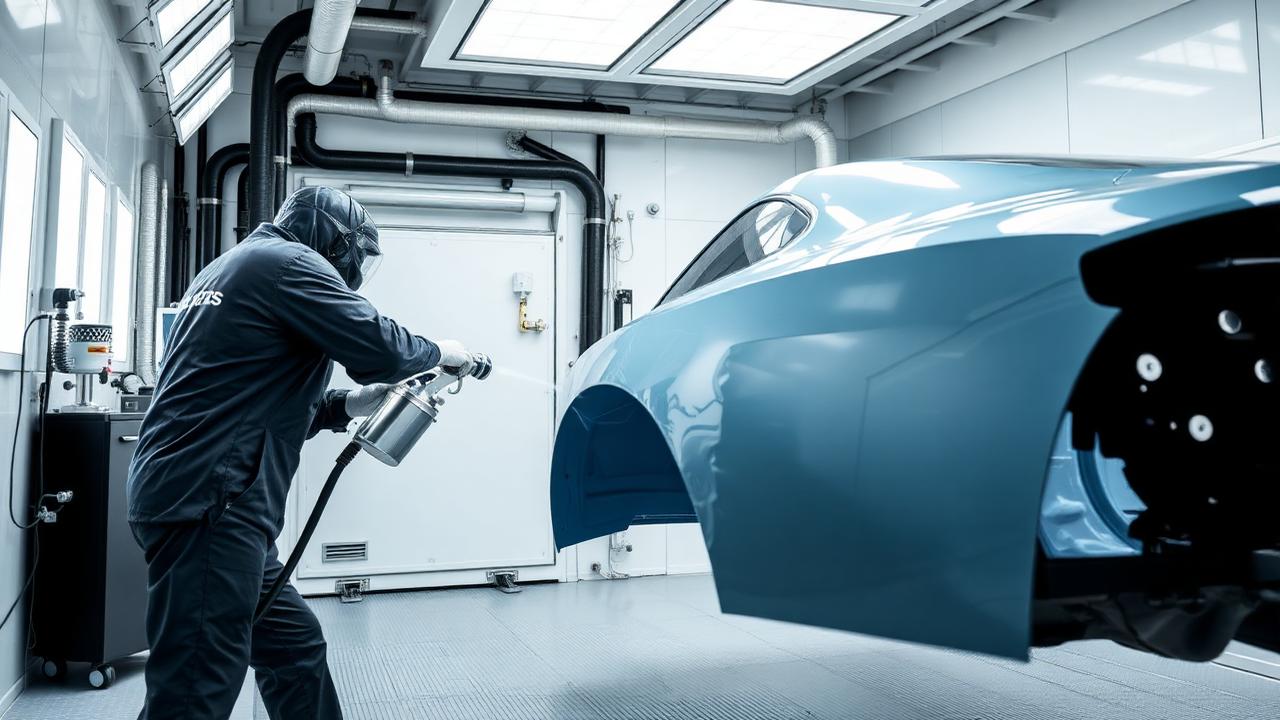
A compressor converts ~100% of shaft power to heat. Ducting hot compressor-room air into an adjacent process (paint booth pre-heat, wash-bay water pre-heat, warehouse winter warmth) recovers most of it. Even simple duct-to-neighbouring-room heat recovery saves SAR 8,000–15,000/year on a 75 kW unit.
Common mistakes
- Using nameplate kW × hours × tariff — ignores load factor and overstates cost by 20–40%.
- Forgetting the dryer, downstream fans, and controls — add ~5% to compressor kW for the full room load.
- Assuming VSD saves energy on flat loads — it doesn't; on genuine 24/7 continuous load a fixed-speed IE3 screw matches or beats a VSD.
Related reading
- Screw vs piston — sizing your factory air demands
- How to choose the right air compressor for KSA manufacturing facilities
- 10 bar vs 8 bar working pressure
- Compressor room ventilation checklist
FAQ
Which is more accurate — motor amps or shaft kW? Amps × voltage × √3 × power-factor gives real electrical draw at that moment. Log it for a full shift and average. Shaft-kW math is the estimate; amps are the truth.
Does soft-start save electricity? No — it saves inrush current at start-up and protects the grid, but average energy use is unchanged. Only VSD trimming saves running energy.
Is heat recovery worth the ducting cost? Yes on any plant running >3,000 h/year with a nearby heat sink. Typical payback: 12–18 months.
Want us to run these numbers on your machine? Send us your compressor model, running hours, and tariff — we'll return a written energy audit and payback comparison against a VSD screw for your site requirements.