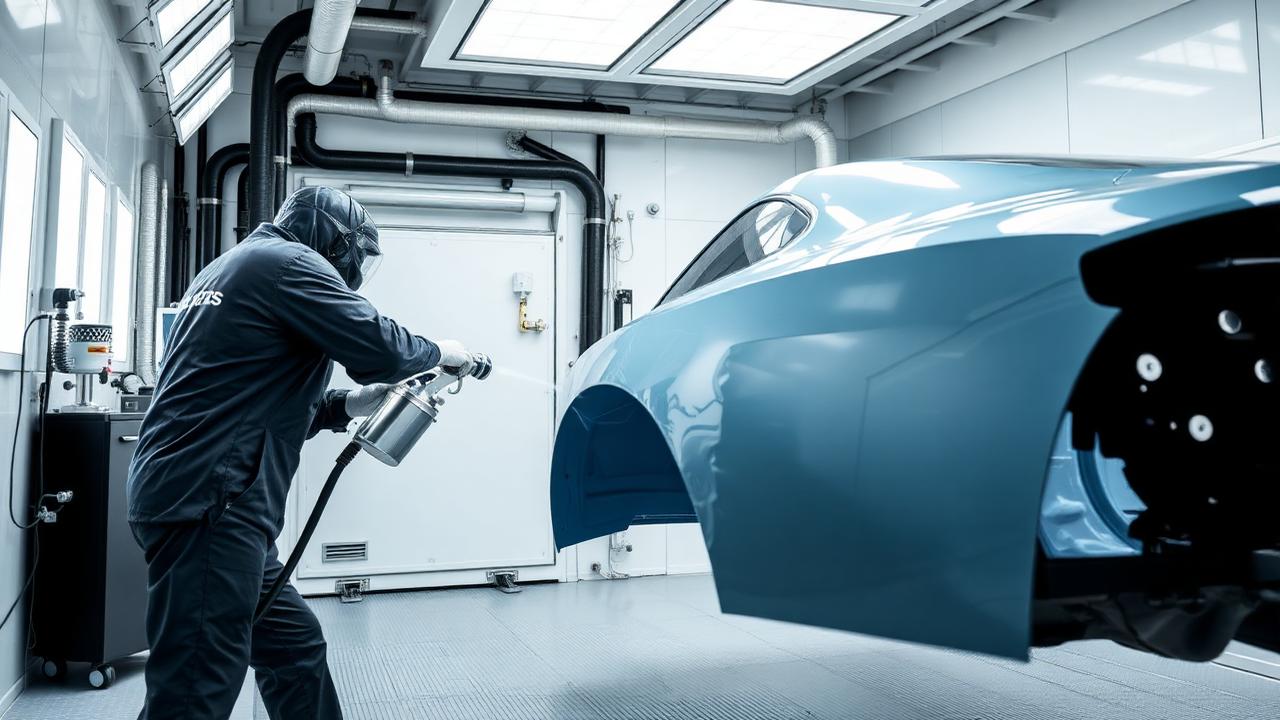
Fisheyes, orange peel, oil bloom — every paint defect a booth technician chases traces back to two things: dirty air and wet air. Fixing them means understanding ISO 8573-1, the international standard for compressed-air purity, and building the filter chain that meets it. This guide covers the exact class your paint booth needs, the equipment that delivers it, and the mistakes that let contaminants through.
What ISO 8573-1 actually measures
ISO 8573-1:2010 grades compressed air on three contaminants, each on a scale where lower is cleaner:
| Contaminant | What it is | Why it matters for paint |
|---|---|---|
| Solid particles | Dust, rust, pipe scale | Nibs and gritty finish |
| Water (dew point) | Vapour and liquid moisture | Fisheyes, blush, poor adhesion |
| Oil (total) | Aerosol, vapour, liquid | Cratering, silicone-like defects |
A rating is written as three numbers, e.g. ISO 8573-1:2010 [1:2:1] = particles class 1, water class 2, oil class 1.
The class a paint booth needs
| Application | Recommended ISO class |
|---|---|
| General workshop spraying (primers, base coats) | [2:4:2] |
| Automotive refinish (2K clear coats, metallics) | [1:2:1] |
| Waterborne base coats | [1:2:1] — moisture control is the whole game |
| High-end custom / show paint | [1:1:1] |
| Powder coating | [2:4:2] — dry air matters more than oil class |
For a typical Saudi body shop running 2K solvent clear, target [1:2:1] and confirm the required result through appropriate air-quality testing.
Translating classes into equipment
Each class corresponds to concrete equipment. From the compressor outward:
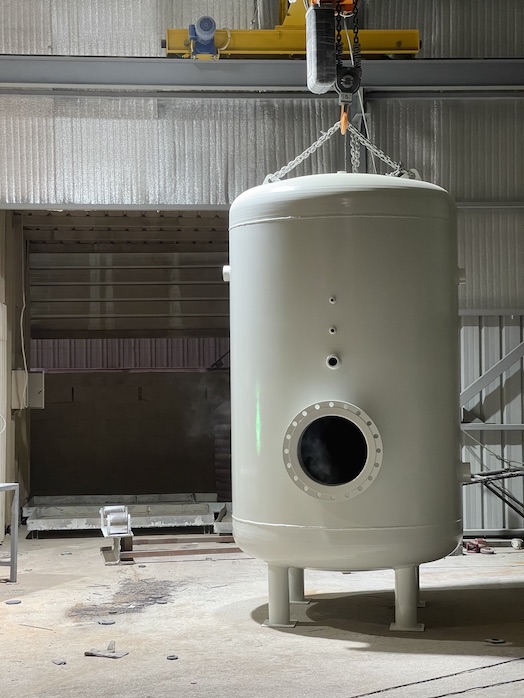
Stage 1 — Air receiver tank
The tank does the first-stage water knockout by letting the air cool. Fit an auto-drain and slope the outlet upward so free water falls back into the tank, not into the dryer. See our tank sizing guide for the right capacity.
Stage 2 — Refrigerated dryer (water)
A refrigerated dryer chills the air to +3 °C, condensing water out. This gives a pressure dew point of +3 °C — ISO 8573-1 water class 4 at Saudi ambients. That is enough for solvent paints but not enough for waterborne coatings or humid coastal sites, which need a desiccant dryer to hit a −40 °C dew point (water class 2).
Stage 3 — Coalescing filter (aerosol oil + fine particles)
A 0.01 µm coalescing filter downstream of the dryer removes oil aerosol and sub-micron particles. This is what takes you from oil class 3 to oil class 1.
Stage 4 — Activated carbon filter (oil vapour)
The coalescing filter cannot catch oil in vapour form. An activated-carbon filter after the coalescer strips vapour and odour and delivers oil class 1 (< 0.01 mg/m³) at the paint gun.
Stage 5 — Point-of-use filter/regulator at the booth
Final 5 µm particulate + regulator directly at the booth wall. This catches any pipe rust picked up between the compressor room and the booth.
Full filter chain — quick reference
Compressor → receiver tank → refrigerated dryer → 5 µm pre-filter → 0.01 µm coalescing filter → activated carbon filter → point-of-use filter/regulator → spray gun
Confirm the required filter stages with the dryer and filter manufacturer for the target air-quality class.
Why Saudi climate makes this harder
- Summer intake at 45 °C carries more water vapour than a cooler intake. Refrigerated dryers must be sized on inlet-air temperature, not compressor CFM alone.
- Coastal humidity in Jeddah/Dammam pushes even oversized refrigerated dryers past their class-4 limit. Pair with a desiccant dryer for waterborne paint or high-humidity sites.
- Sand and dust can shorten pre-filter life. Inspect filters against the manufacturer’s differential-pressure and service guidance.
How to verify you actually meet the class
- Dew-point meter at the booth inlet. Portable meters cost less than one repainted door. Read after 30 min of steady demand.
- Blotter test — spray onto white blotter for 60 seconds at 3 bar; any brown/wet spot means oil or water breakthrough.
- Differential-pressure gauges on every filter — replace the element when ΔP exceeds 0.7 bar, not when the calendar says so.
Rotary screw vs piston for paint air
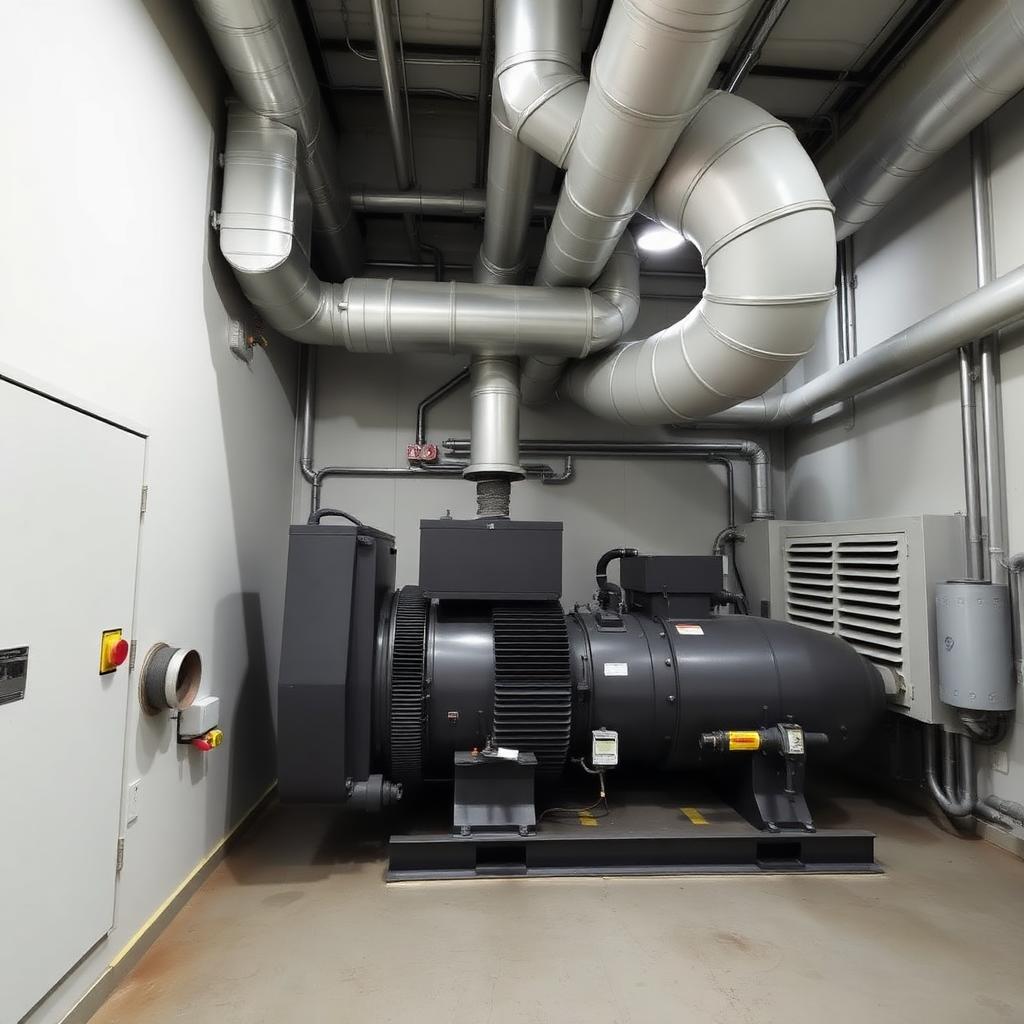
Rotary screws are the norm for paint booths — cleaner discharge, lower pulsation, easier to pair with a proper filter chain. See our screw vs piston comparison for the full trade-offs. If you must run a piston into a booth, insist on a double-stage unit and a larger coalescing filter — piston oil carry-over is inherently higher.
Common paint-air mistakes
- One filter for everything. A "filter/regulator" combo from the hardware store is a 25 µm particulate filter — it does nothing for oil or water.
- Dryer sized to nominal CFM. Saudi ambient derating means a dryer rated 100 CFM at 25 °C delivers roughly 65 CFM at 45 °C. Size for site conditions.
- Filters mounted upstream of the dryer. Coalescing filters flood with liquid water and pass oil straight through. Always dryer first, then coalescing.
- No drain on the receiver. Even one week of skipped drains puts 20+ litres of standing water into your air lines.
- Skipping the carbon filter. You will not see oil aerosol in the finish, but you will see it as fisheyes on the next re-spray six weeks later.
Related reading
- Air receiver tank sizing guide — the first stage of your paint-air chain.
- Screw vs piston compressor — which compressor family is right for paintwork.
- Air compressor maintenance & repair — how to keep the filter chain performing year after year.
FAQ
What ISO 8573 class does a car paint booth need? Automotive refinish with 2K clear coats: [1:2:1]. For waterborne base coats or show-car work, step up to [1:1:1] with a desiccant dryer.
Do I need a desiccant dryer or is refrigerated enough? Refrigerated (class 4 water, +3 °C dew point) is fine for solvent paints in Riyadh. Waterborne base coats or Jeddah/Dammam humidity need desiccant (class 2, −40 °C).
Why do I still get fisheyes with an inline filter? A single inline filter is almost never a coalescing filter. Fisheyes = oil. You need a 0.01 µm coalescing filter followed by an activated-carbon filter, both downstream of the dryer.
How often should I change coalescing and carbon filter elements? Coalescing: every 4,000 hours or when ΔP hits 0.7 bar. Activated carbon: follow the element manufacturer’s stated service interval and verify outlet air quality.
Does compressor oil-injection cause paint defects? Only if downstream filtration fails. The downstream air-treatment chain determines the air quality delivered at the point of use, so specify the treatment your application requires. Namerah supplies oil-injected compressors; no compressor supplied here is described as delivering oil-free air.
Setting up a new paint bay? Send us your booth CFM demand and paint chemistry — we will spec the compressor, dryer, and full ISO 8573 filter chain for your site requirements.