
Industrial workshops run their compressors hard — high ambient temperatures, fine airborne dust, and multi-shift operation. Skipping service or guessing at a repair is what turns a small part replacement into a full rebuild. This guide covers the diagnostics, repairs, and service intervals that keep a piston or rotary screw compressor running at 10 bar over its service life.
For the day-to-day routine, see our shorter Maintenance Checklist. This article picks up where the checklist ends — what to do when something is already wrong.
Why preventive maintenance matters
- Heat: higher ambient temperature can shorten compressor-oil life.
- Dust: a clogged intake filter starves the airend and pushes discharge temperatures past trip points.
- Humidity: coastal or humid sites can generate more condensate; an undersized dryer wets the entire air line.
- Duty cycle: 2-shift operation doubles running hours per year — service intervals must follow hours, not the calendar.
The 5 most common faults — and how to diagnose them
1. Overheating / thermal shutdown (screw)
The screw trips on high discharge temperature (typically >110°C). In order of likelihood:
- Clogged cooler fins — wash with low-pressure water from the inside out.
- Low or degraded coolant — check level cold; if dark or smells burnt, change it and the separator together.
- Failed thermostatic valve — coolant bypasses the cooler entirely. Replace the valve element.
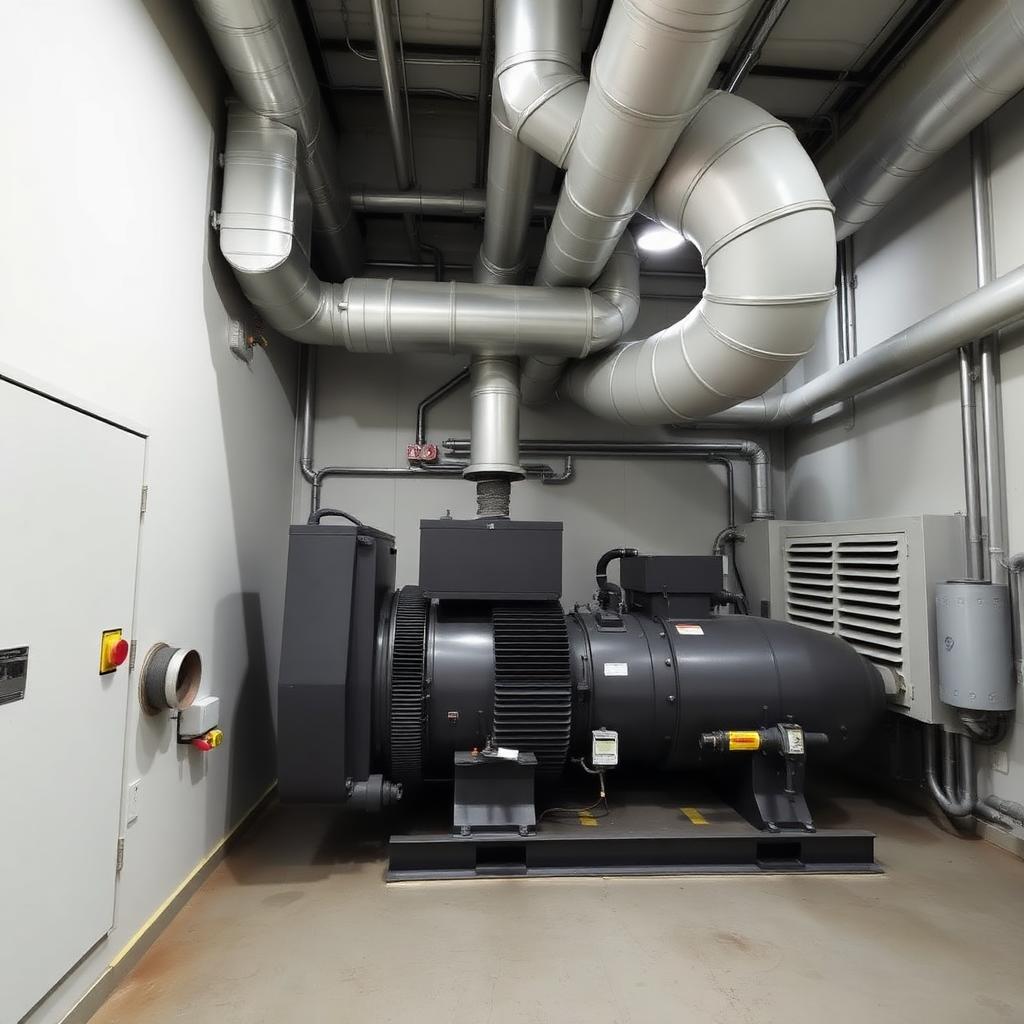
- Ambient too hot — plant rooms above 45°C need forced ventilation or ducted intake.
- Failing airend bearings — last resort; if temperature climbs with no load change, plan an airend service.
2. Oil carryover into the air line
You see oil at the point-of-use filter or in the receiver drain. Causes:
- Saturated separator element (most common) — replace at 4,000 hours or when differential pressure across it exceeds 1 bar.
- Overfilled coolant — drain to the sight-glass midline.
- Scavenge line blocked — the small return tube from the separator to the airend. Clear it.
- Wrong oil grade — using automotive oil instead of compressor coolant causes foaming.
3. Pressure will not build to 10 bar
- Unloader valve stuck open — strip and clean, replace seals.
- Inlet valve not closing — listen for air blowing back through the air filter when running.
- Worn piston rings / valve plate (piston units) — compression test confirms.
- Leaks downstream — isolate the compressor and pressurise the line overnight; a 1 bar drop in 8 hours means a real leak (target <0.3 bar).
4. Excessive vibration (piston)
- Loose anchor bolts — torque the foot pads to spec.
- Cracked vibration isolators — replace as a set, not one at a time.
- Worn connecting-rod bearings — knock under load; rebuild or replace short block.
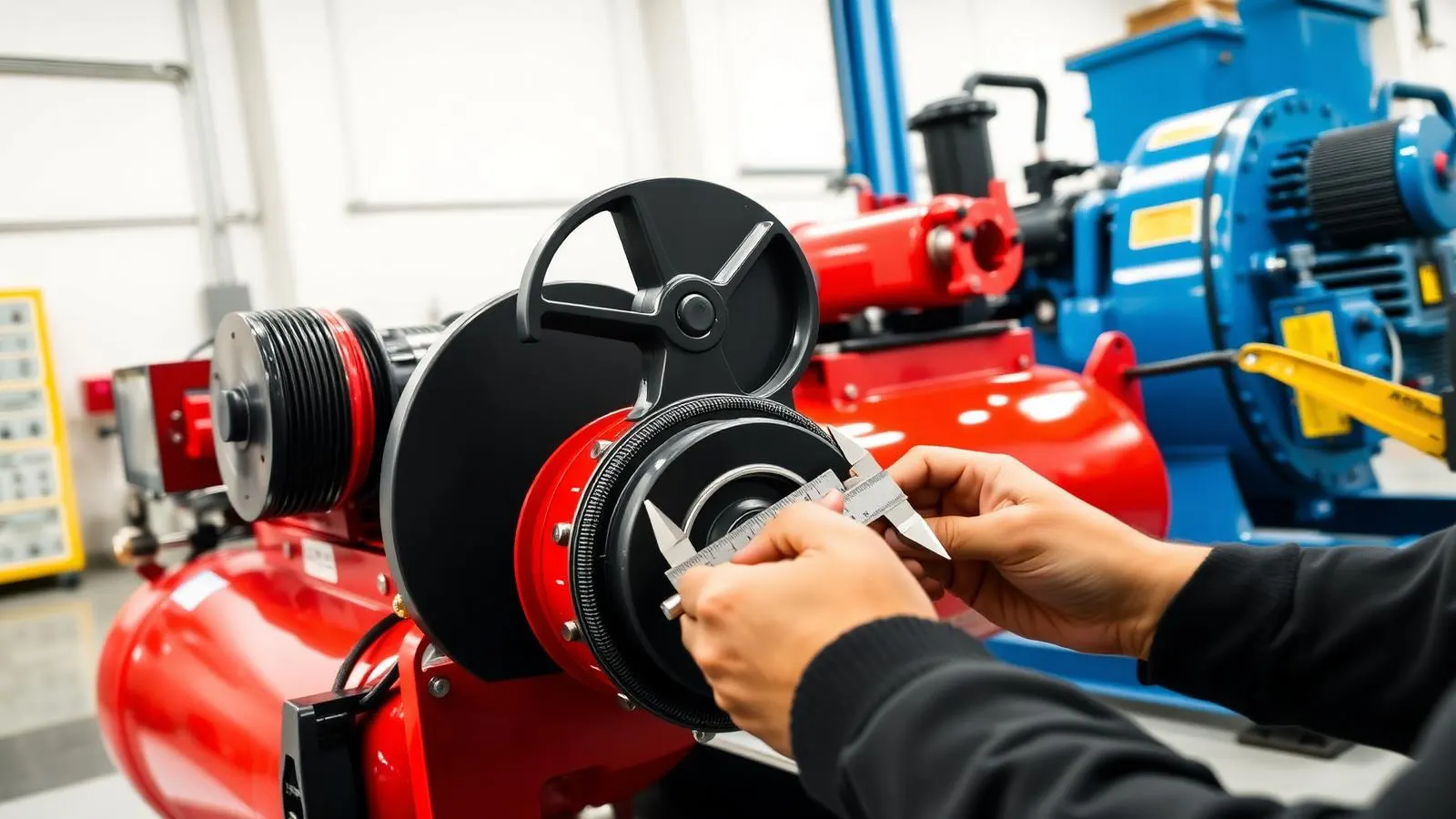
- Belt misalignment — straight-edge across both pulleys; correct flywheel offset.
5. Auto-drain valve not working
Water builds in the tank, corrodes from the inside, and eventually punctures. The receiver becomes a safety risk. Either replace the auto-drain solenoid or fit a timed electronic drain — never just close the valve and "drain manually later". If drains are struggling to keep up, the tank itself may be undersized for your compressor's output — check our receiver tank sizing guide.
Repair vs replace — a decision guide
| Component | Repair if | Replace if |
|---|---|---|
| Belts | <2 years old, no cracks | Glazed, cracked, or stretched past adjustment |
| Intake / oil / separator filters | Never repair | Always replace at interval |
| Unloader valve | Seals worn but body intact | Body pitted or cracked |
| Solenoid valves | Coil failed | Body internally corroded |
| Motor | Bearings only | Windings burnt, insulation failure |
| Airend (screw) | Bearings within tolerance | Rotors scored, end-clearance out of spec |
| Receiver tank | Surface rust only | Internal pitting > 1 mm, any weep |
A general rule: if the scope of repair approaches a significant share of a new equivalent unit, replace. The new unit comes with a fresh warranty and current-generation efficiency.
Service intervals
| Task | Standard |
|---|---|
| Intake filter | 2,000 h |
| Compressor oil / coolant | 4,000 h |
| Oil filter | 2,000 h |
| Separator element | 4,000 h |
| Belts (piston) | inspect 500 h |
| Valve plate (piston) | 8,000 h overhaul |
| Airend (screw) major | 40,000 h |
Use genuine spares. A low-grade aftermarket separator that fails early costs you the element plus contaminated downstream filtration plus unscheduled downtime.
When to stop and call a service engineer
Stop using the compressor and call Namerah service immediately if you see:
- Oil in the discharge air (separator or seal failure imminent)
- Repeated thermal trips with clean cooler and fresh coolant
- Motor amps more than 10% above nameplate at full load
- Any weep from the receiver tank shell or weld
- Pressure relief valve venting during normal operation
- Burning-electrical smell from the starter panel
Ask Namerah to confirm parts and service requirements for your exact model in the quotation.
FAQ
How often should I change compressor oil? Follow the manufacturer’s model-specific running-hour interval and shorten it only when the manufacturer or a qualified service engineer recommends doing so for site conditions.
My compressor is not building pressure — what should I check first? Isolate the compressor from the line and run it into the tank only. If pressure still does not build, the fault is on the compressor side (unloader, inlet valve, rings). If it builds in isolation, you have a downstream leak.
Why does my screw compressor trip on temperature? Nine times out of ten it is a dirty cooler or low coolant. Wash the cooler and check coolant level cold before assuming a thermostatic valve or airend problem.
Is it worth repairing an old piston compressor or should I replace it? If the motor and tank are sound and the repair (rings, valves, bearings) is a modest share of a new equivalent, repair. If the tank shows any internal pitting or the motor has been rewound twice, replace it — the tank is a safety item.
Can I use automotive engine oil in a compressor? No. Engine oils foam under compression and contain detergents that attack separator elements. Always use the manufacturer-specified compressor oil or coolant.
Need parts or a service visit? Contact our service team with your unit's model and serial number — we will review the parts and site-visit requirements and confirm them in the quotation.